- Quebec’s parish registers come to us from a small group of individuals: the priests of the province.
- Records followed a predetermined format, but some priests still added their own comments to them.
- In 1734, priest René Portneuf rejected a godfather for his ignorance of the Small Catechism and named himself godfather.
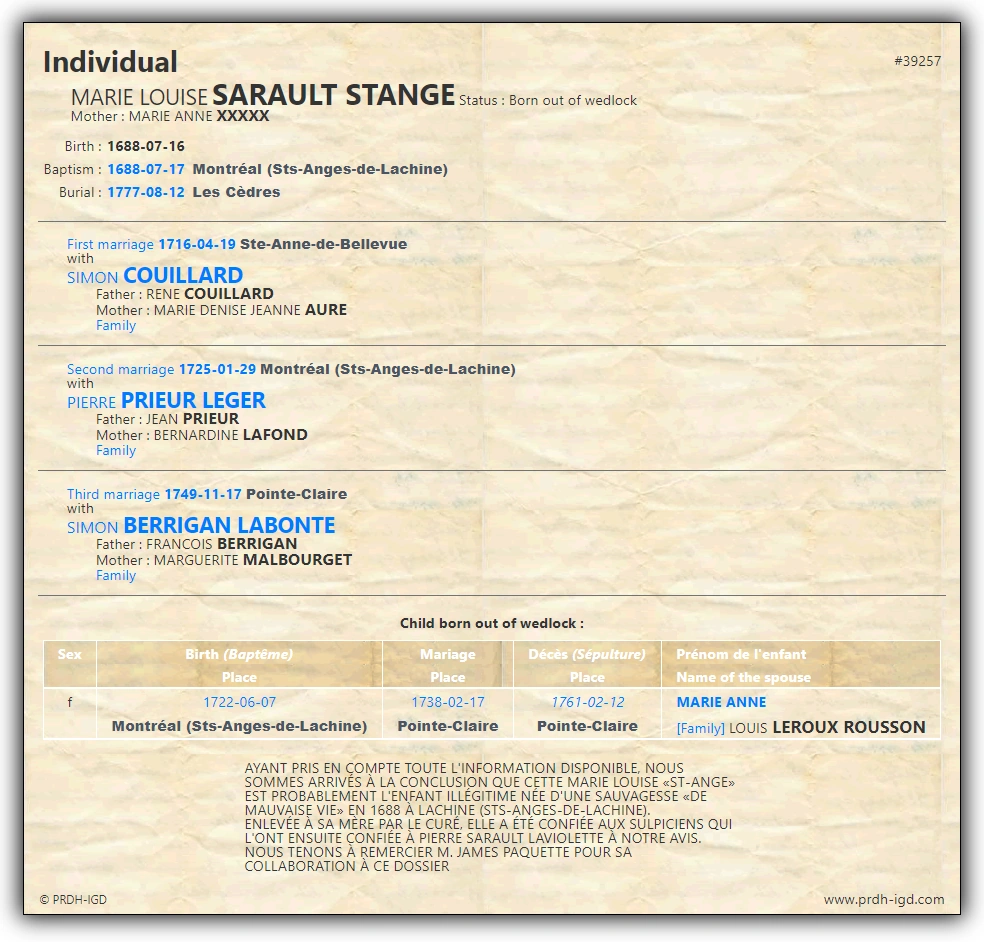
- Blatant racism is often found in the registers, as in the 1688 baptismal record of Marie Louise in Lachine.
- All researchers should carefully read the records pertaining to their ancestors, which also contain anecdotes.
The parish registers of Quebec are an invaluable resource for genealogists and historians interested in the story of the inhabitants of the province. But it is important to emphasize that this window into the past comes to us from a small group of individuals: the priests of the province.
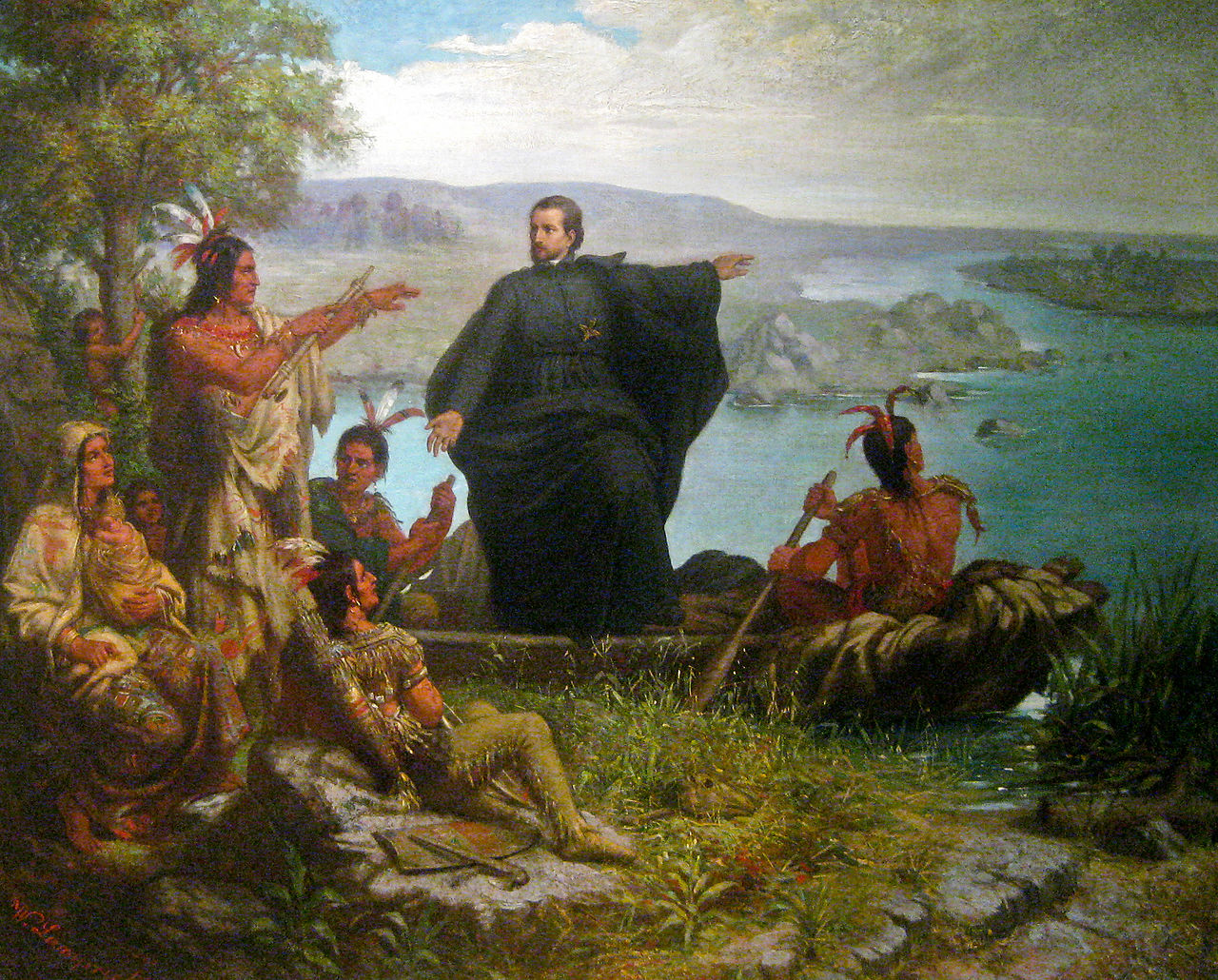
When drafting a parish record, the priest had to follow a predetermined format, dictating a formulation that generally did not deviate from record to record. Genealogists are familiar with this format; date of writing, date of the event, name of the subject(s), name of the parents, all framed by formulas such as “by us, the undersigned priest of the parish” and “who have declared not knowing how to sign”.
But these guidelines did not prevent some priests from adding a little color to their records, as you will see in this article.
The documents used in this article are from the LAFRANCE, one of 15 tools available to Genealogy Quebec subscribers.

We begin our visit of the past in 1734 with priest René Portneuf of the parish of Saint-Jean-de-l’Île-d’Orléans, celebrating the baptism of Marie Renée Marguerite Charlan.
The priest was much more than the officiant of the religious ceremonies of his parish; he was also its moral authority! Let us admire the zeal of Father Portneuf here:
« Je me suis nommé parrain après avoir répudié Simon Campagna à cause de son ignorance […] sur la religion ainsi qu’il apparu à tous ceux qui étaient présents lorsque je l’ai interrogé sur le Petit Catéchisme. »
“I named myself godfather after having repudiated Simon Campagna because of his ignorance […] about religion as it appeared to all those who were present when I asked him about the Small Catechism.”
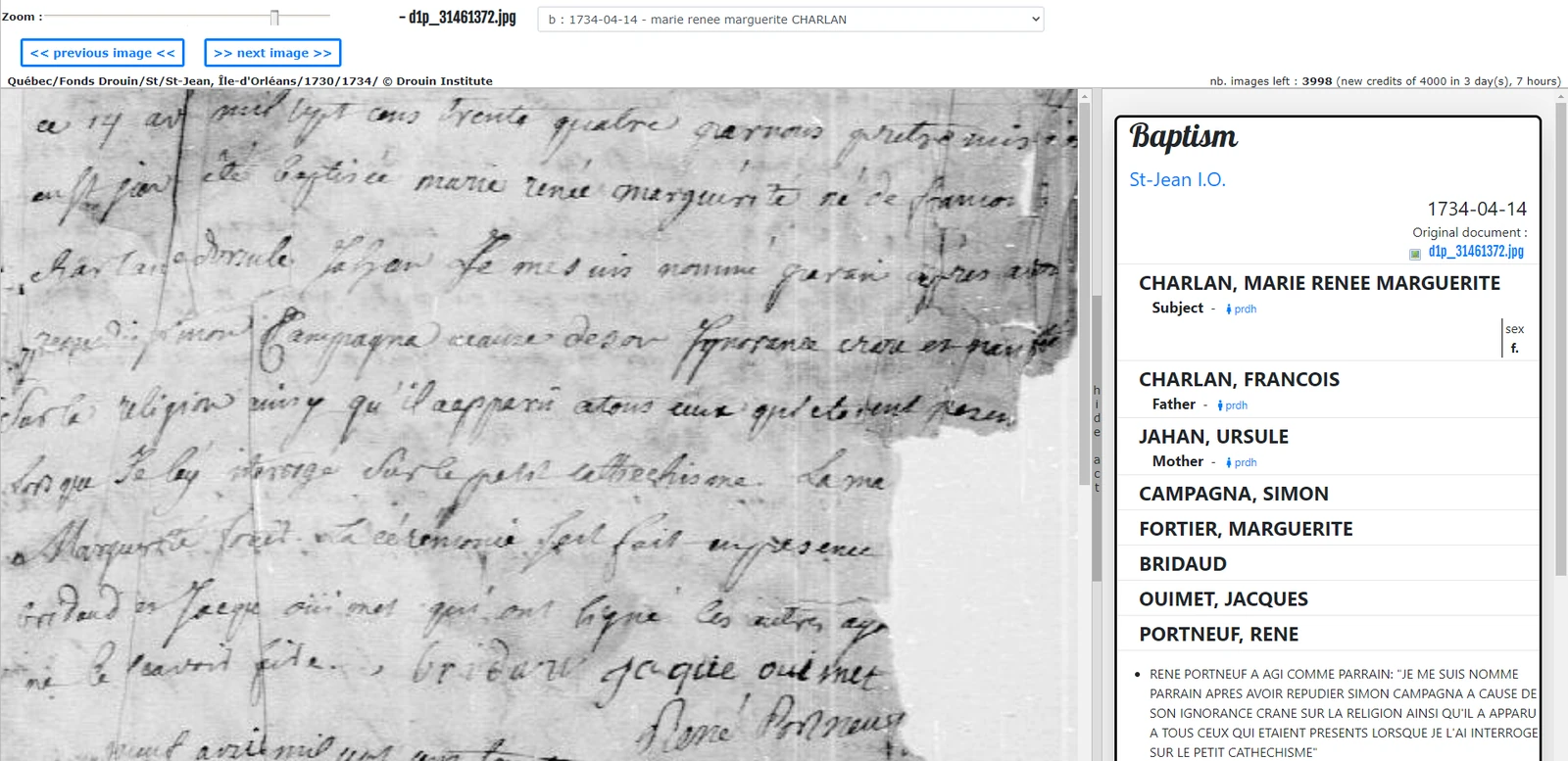
It is interesting to note that Simon Campagna was already 5 times godfather before his regrettable meeting with Father Portneuf. You will not be surprised to learn that he will have no other godchildren during his lifetime.
The burial of soldier Jean Simon dit Sansregret at the Hotel Dieu de Québec, also in 1734, reminds us of the importance and omnipresence of religion in the customs and culture of the French colony.
« […] sans avoir jamais voulu recevoir les sacrements quoy que les Prêtres et Religieux se fussent employés avec beaucoup de zele pour le gagner, il fut enterré par nos infirmiers proche de la caserne sans honneurs et sans prières, et avec l’horreur qu’il inspirait. »
“[…] without ever having wanted to receive the sacraments despite the Priests and Religious employing great zeal to gain him, he was buried by our nurses near the barracks without honors and without prayers, and with the horror he inspired. “
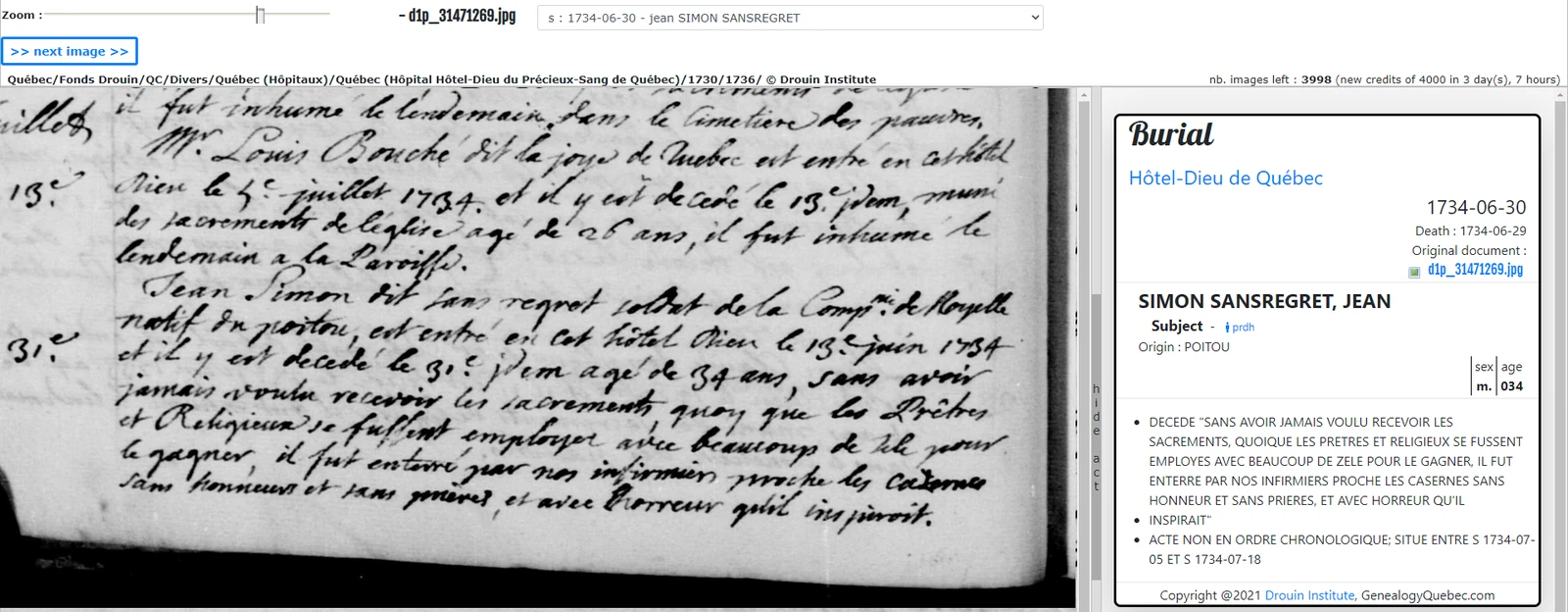
Clearly, Mr. Simon dit Sansregret (which translates to without regrets) was aptly named.
Speaking of horror, it is hard to miss the blatant racism that is often found in the registers. Take, for example, the baptismal record of Marie Louise, daughter of Marie Anne, dated July 17, 1688 in Lachine.
« […] a été baptisée Marie Louise fille d’une sauvagesse nommée Marie Anne femme de mauvaise vie connue pour folle par tous les pais et coustumière d’avoir de tels enfans »
“[…] was baptized Marie Louise daughter of a savage named Marie Anne woman of ill-repute known for being mad by all the inhabitants and known to have such children”

Family reconstruction work carried out by the PRDH at the University of Montreal allows us to learn a little more about the fate of young Marie Louise. She would have been taken from her mother by the parish priest and entrusted to the Sulpicians, and then brought up by a Pierre Sarault dit Laviolette. Married three times over the course of her life, she drowned in 1777 at the ripe old age of 89.
But all is not dark in the registers; they often remind us of the humanity within some of the colony’s priests. The burial of Marie Benoist on January 13, 1736 in Longueuil, is a good example:
« […] a été inhumé le corps de defunte Marie Benoist […] âgée d’environ 44 ans, pendans lesquels, il a plû au Seigneur de l’éprouver par des maladies et des soufrances continuelles, qui ne lui ont rien fait perdre de l’espris de charité de douceur et de patiance, qui l’ont fait admirer par tous ceux qui ons connu cette vertueuse vierge sans vices qui est décédée comblée de merite et de grâce. »
“[…] was buried the body of deceased Marie Benoist […] aged about 44 years, during which it pleased the Lord to test her by continual illnesses and sufferings, which did not make her lose anything of the spirit of charity, gentleness and patience, which made her admired by all those who have known this virtuous virgin without vices who died full of merit and grace. “

In a similar vein, we have the burial record of naturalist and surgeon Michel Sarrazin, who died on September 9, 1734 at the Hôtel Dieu in Quebec.
« Il avait exercé son art en ce païs plus de 45 ans avec une rare charité, un parfait desinteressement, un succès extraordinaire, une adresse surprenante, une application sans égale pour toutes sorte de personnes qui luy faisait faire avec joye et avec grace, tout ce qui depandait de ses soins pour le soulagement des malades qu’il traitait, il était aussy habile chirurgien que scavant médecin, comme les belles cures qu’il a faites en sont les preuves. »
“He had exercised his art in this country for more than 45 years with rare charity, a perfect disinterestedness, an extraordinary success, a surprising address, an unequaled application for all kinds of people which made him do everything with joy and grace, everything that depended on his care for the relief of the patients he treated, he was as skilful a surgeon as he was a doctor, as the fine cures he performed are proof of this.”
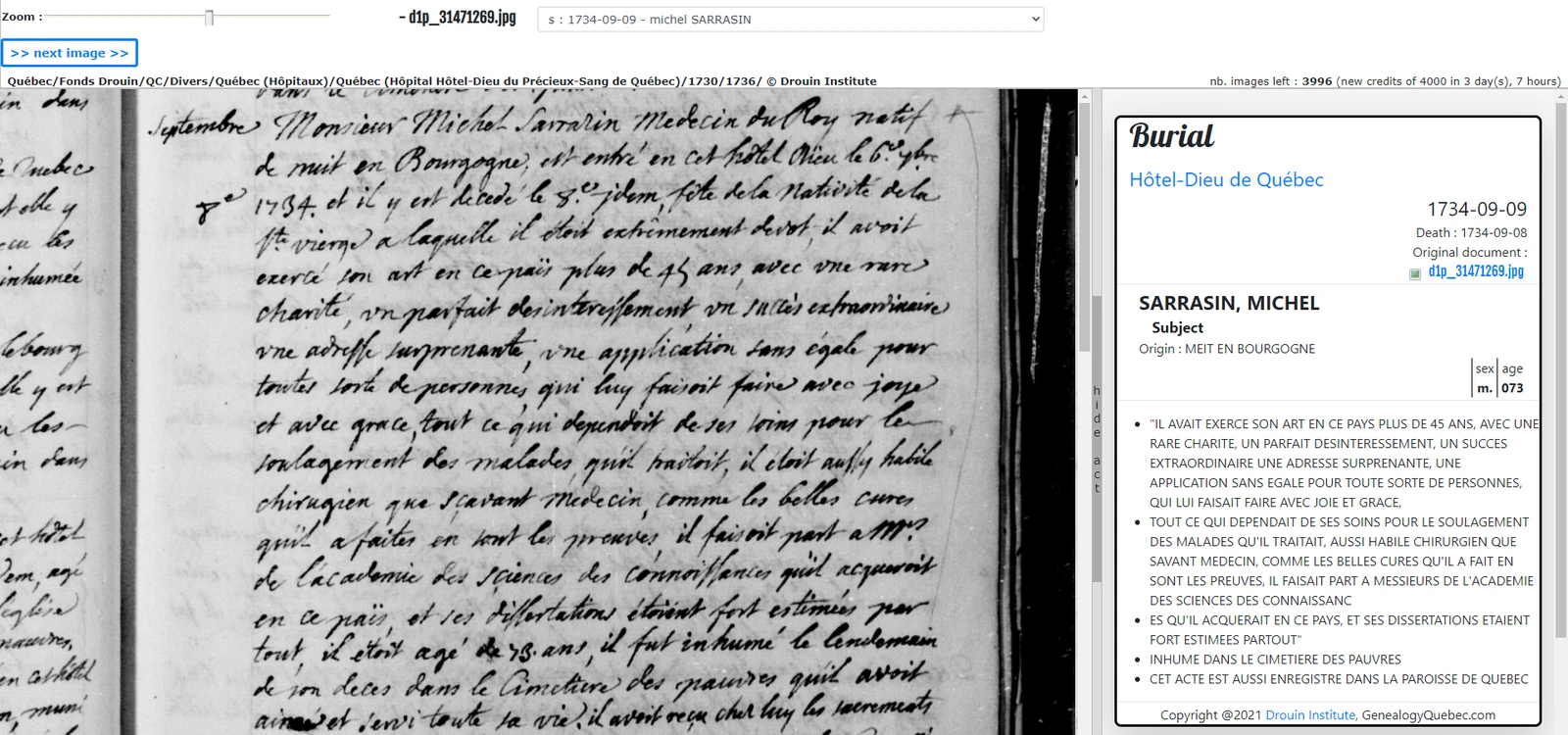
It is evident that Mr. Sarrazin had the esteem and the deep respect of his contemporaries, and he is regarded today as the first Canadian scientist. You can learn more about this fascinating individual here.
We are all aware of the value of church records in the genealogical sphere, but are we paying enough attention to the anecdotes they contain? The priests have offered us, in their own way, a fascinating window into our past, and all researchers should make it their duty to carefully read the records that pertain to their ancestors.
In the next articles in this series, I will continue to explore various historical subjects and themes using the documents available on Genealogy Quebec.
François Desjardins
Frequently asked questions
Priests followed a predetermined format: date of writing, date of the event, name of the subject or subjects and name of the parents, framed by formulas such as “by us, the undersigned priest of the parish” and “who have declared not knowing how to sign.”
Yes. In 1734, in Saint-Jean-de-l’Île-d’Orléans, priest René Portneuf repudiated Simon Campagna, judging him ignorant of religion after questioning him on the Small Catechism, and named himself godfather. Campagna, already a godfather five times, never had another godchild.
Beyond the standard formulas, some priests added remarks about people’s lives, faith or reputation. These details reveal anecdotes about our ancestors, such as the praise given to surgeon Michel Sarrazin in his 1734 burial record.
Yes, often. The baptismal record of Marie Louise, dated July 17, 1688 in Lachine, describes her mother, Marie Anne, in contemptuous terms. Family reconstruction work by the PRDH at the University of Montreal traces the child’s fate until her death in 1777.