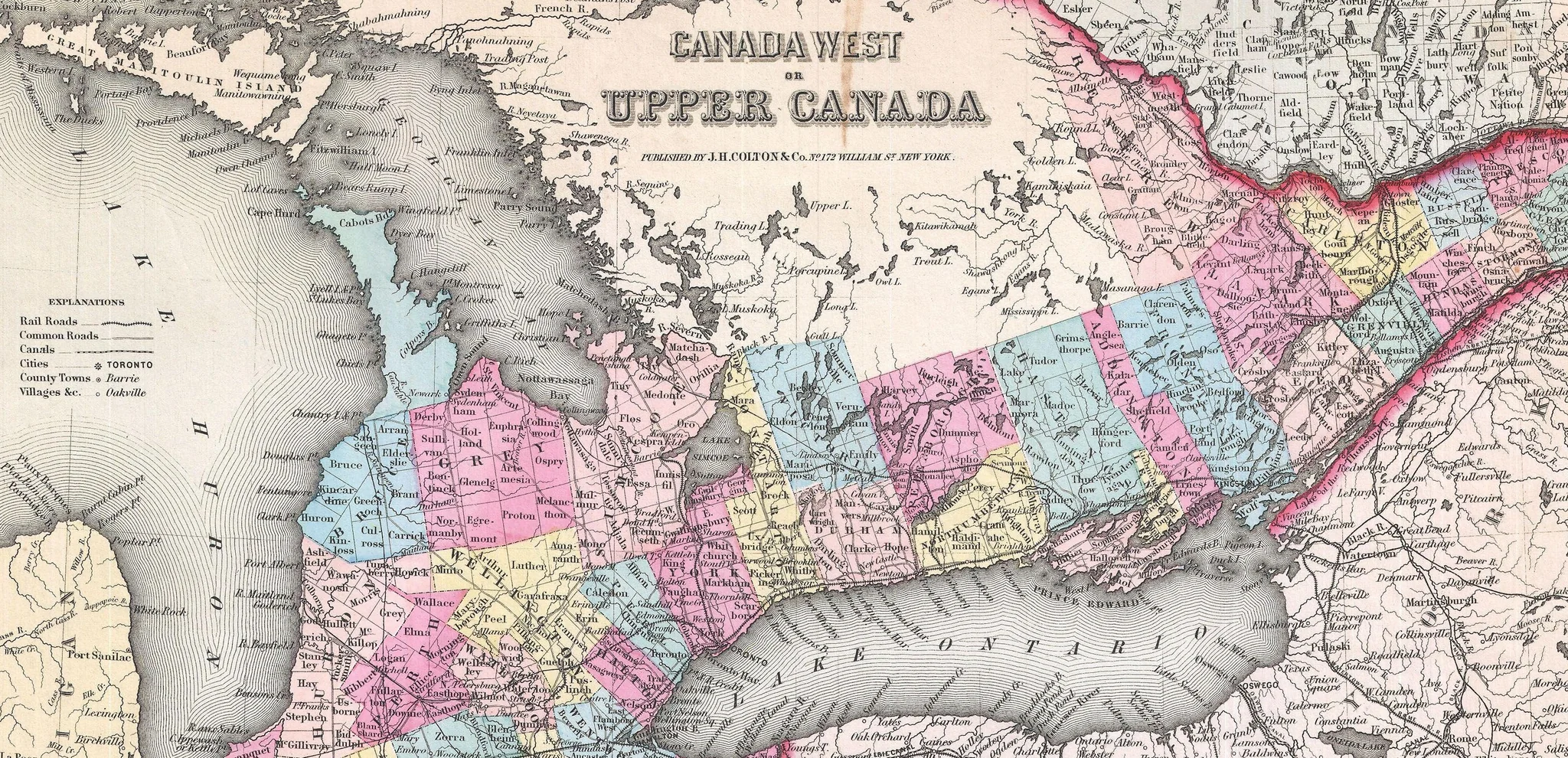
- Champlain founded Quebec City in 1608, and its first baptisms, marriages and burials were recorded eight years later.
- The oldest surviving Quebec records are from the City of Quebec for the year 1621.
- The Drouin Collection Records include every Quebec parish register from 1621 to 1940.
- Your goal is to establish a direct link between generations, from yourself to the first immigrant in your family line.
- The Fichier Origine lets you find information predating your ancestors’ arrival, from records traced in their country of origin.
Thanks to the systematic recording of baptisms, marriages and burials by the Catholic church, Quebec genealogists – novices and professionals alike – have access to a detailed outlook of their ancestors’ lives and family connections. Through these documents, researching your ancestry in Quebec is much easier than it is in other parts of the world. But how far back can you retrace your ancestors in Quebec?
In 1608, Samuel de Champlain establishes the city of Quebec along the shores of the St-Lawrence river. 8 years will pass until the city’s first vital events (baptisms, marriages and burials) start being recorded.
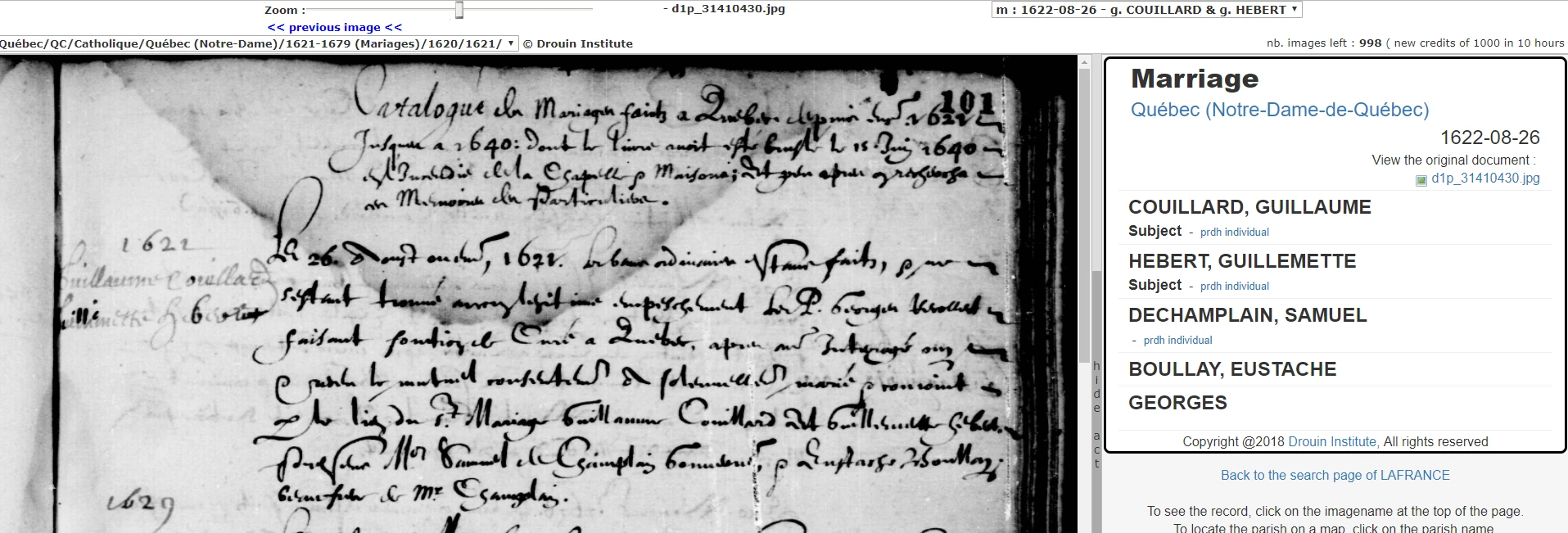
Nowadays, the oldest surviving records are from the City of Quebec for the year 1621.
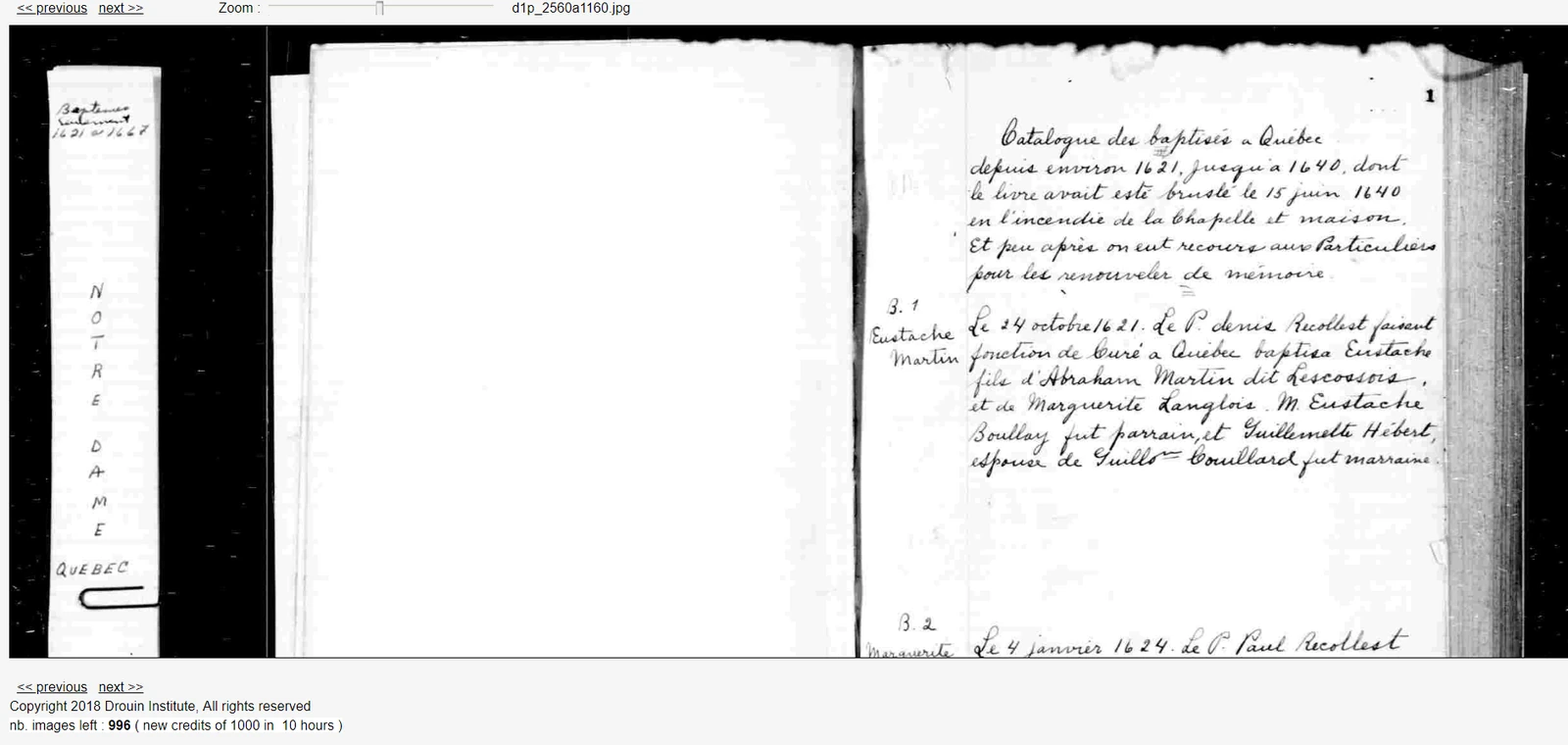
This register, as well as those from every Quebec parish between the years 1621 and 1940, is available in the Drouin Collection Records with a subscription to GenealogyQuebec.com.
First immigrants
In a previous article, we explored the lasting impact that first immigrants had in the frequency and variation of last names in Quebec. In this context, the “first immigrant” expression refers to the first member of a given family who settled in a region. When trying to research your ancestry in Quebec, your goal is to establish a direct link between generations spanning from yourself to the first immigrant in your family line. This guide, which describes the process of establishing your ancestry using GenealogyQuebec.com, is a must read for anyone interested in researching their ancestors in the province.
When it comes to women, many of these first immigrants are known as “King’s Daughters” (Filles du Roi). The King’s Daughters were single women recruited by the King between 1663 and 1673 in order to populate New France. You will find more information about these fascinating women in this article.
Fichier origine
To go back further than the Quebec parish records, the best resource available is the “Fichier Origine“. The “Fichier Origine” is a free-access directory of civil and notarized records pertaining to the family origins of immigrants – mostly French – established in Quebec between the early 1600s and 1865.
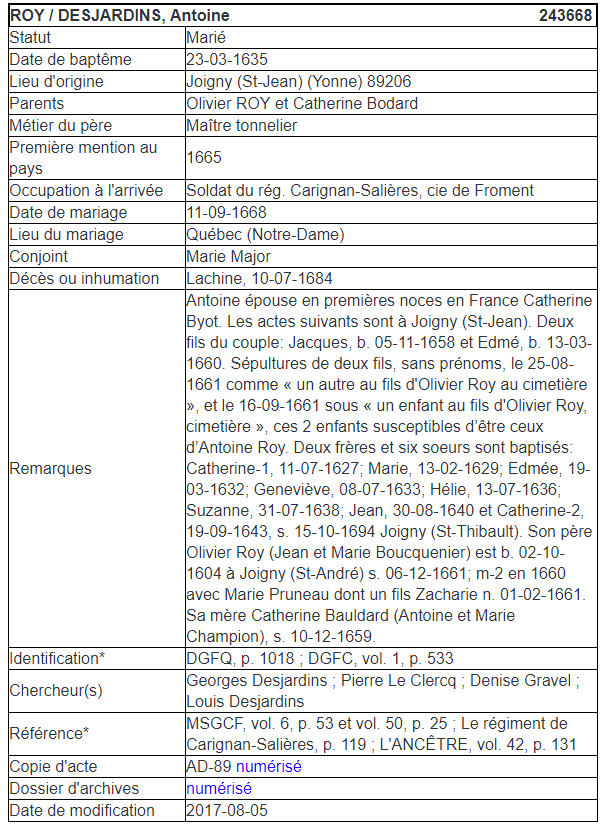
It contains every individual whose birth or baptism record was traced back to their country of origin. As such, you can use the Fichier Origine to find information predating the arrival of your ancestors in the province.
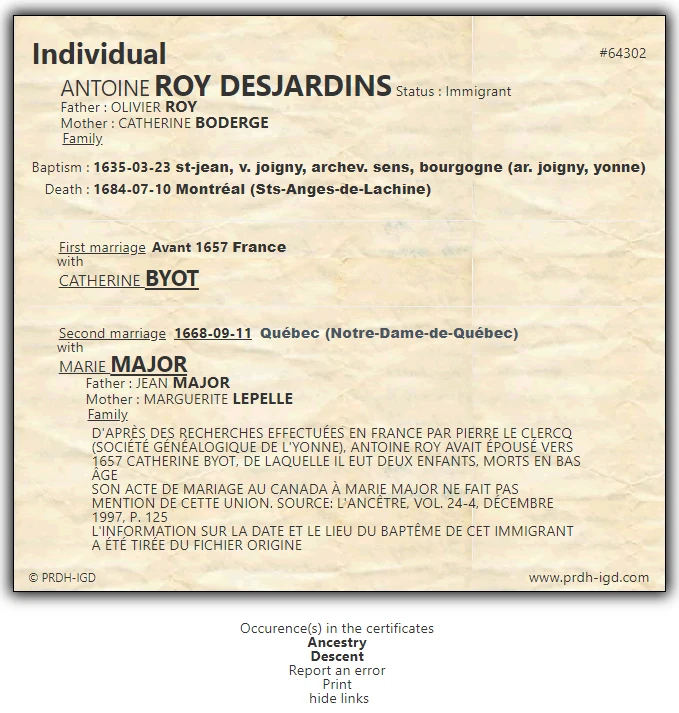
In addition, you should know that the PRDH-IGD individual files often integrate information sourced from the Fichier Origine. For example, here is Antoine Roy dit Desjardins’ individual file, where the date and location of his baptism were taken from the Fichier Origine.
To conclude, it cannot be overstated how lucky we are in Quebec to have access to such a wealth of historical documentation and information, which makes it possible to research our ancestry all the way back to the early 17th century. This is particularly evident if your genealogical research takes you to another region or country, where the information is unlikely to be as accessible and detailed.
Good luck with your research!
Frequently asked questions
Samuel de Champlain founded Quebec City in 1608, and its first baptisms, marriages and burials started being recorded eight years later. The oldest surviving records are from the City of Quebec for 1621, available in the Drouin Collection Records alongside every Quebec parish register up to 1940.
The first immigrant is the first member of a given family who settled in a region. Researching your Quebec ancestry means establishing a direct link between generations, from yourself to that first immigrant. Among women, many first immigrants were King’s Daughters (Filles du Roi).
The best resource is the Fichier Origine, a free-access directory of civil and notarized records on the family origins of immigrants, mostly French, established in Quebec between the early 1600s and 1865. It contains every individual whose birth or baptism record was traced to their country of origin.
Yes. PRDH-IGD individual files often integrate information sourced from the Fichier Origine. For example, in Antoine Roy dit Desjardins’ individual file, the date and location of his baptism were taken from the Fichier Origine, giving details from before his arrival in Quebec.