- To bring the women in your family tree to light, you need to know the context in which they lived.
- The Clio Collective, four historians, set out to write a synthesis of Quebec women’s history when none existed.
- The book covers 1617 to 1979 in six periods, from family life and work to the effects of wars and regime changes.
- It focuses on the ordinary women we often find in our family trees, not only on “great women”.
- The author suggests other books published after the Collective’s work to enrich your research on women’s history.
In my last article, Genealogy and women’s history, I talked about the ways in which genealogy can shed light on women’s history, whether by highlighting certain oppressions (injunctions to marriage or maternity, or even slavery for example), or their numerous contributions to society, whether in the family or as nuns, midwives or seamstresses. To be able to do this highlighting work, it is necessary to know a bit about the context in which women were living. A good starting point for this is the book Quebec Women : a History from the Clio Collective (1987).
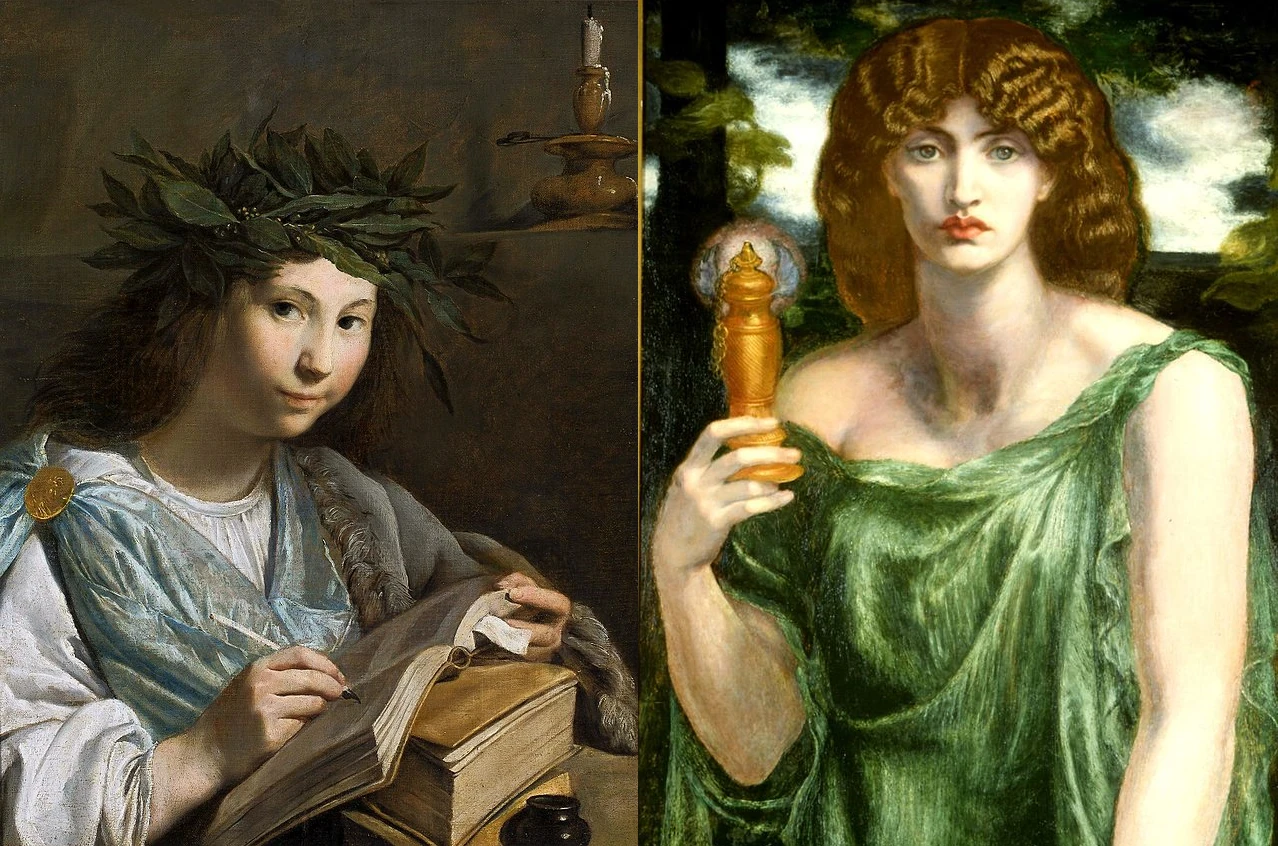
The Clio Collective was formed by four historians : Marie Lavigne, Jennifer Stoddart, Micheline Dumont and Michèle Jean. The name is inspired by Greek mythology : Clio, daughter of Mnemosyne, the memory goddess, is History’s Muse. It seems the four authors were inspired by genealogical questions as well. They open their book with a short anecdote :
”Seven-year old Anne was sitting in the corner of the kitchen, tracing her family tree. She named people as if reciting a nursery rhyme. “My mother’s name is Juliette, Juliette’s mother was called Rebecca, Rebecca’s mother was Maria, Maria’s mother was Emilie…” […] In history classes, nobody could tell her what Emilie, her great-great-grandmother, had done”(Clio’s Collective, 1987 : 11).
Indeed, when the four historians got together, in the 70s, there did not exist a book synthetizing women’s history in Quebec : therefore, their goal was to write one. They wanted to show that ”Women were not only spectators, but also actors in the world’s history” (Collard, 2012). By this, they didn’t only mean ”great women” such as Therese Casgrain or Marguerite Bourgeoys, but also the hundreds of thousands of Emilie, women most would consider ”insignificant” (Clio Collective, 1997 : 11).
Quebec Women : a History can teach us a lot about these ”ordinary” women we often find in our family trees. The book covers four centuries of history, from 1617 to 1979. It can therefore be a very useful complement to our genealogical research. Divided in six periods (Beginnings 1617-1703 ; Stability 1701-1832 ; Upheavals 1832-1900 ; Contradictions 1900-1940 ; The Impasse 1940-1969 ; and The Explosion 1969-1979), the book explores a great variety of subjects. We can find details about parts of life often considered ”trivial” (the modalities surrounding family life or work, for example), but also clarifications of how significant political events, such as major wars or regime changes, affected women’s lives.
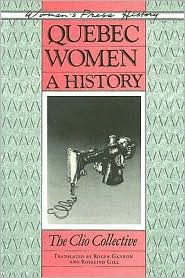
On the fourth cover of the French version of Clio’s Collective’s book, we can read ”Some might say : ”Another book about women!” They are wrong. It is another history book. It’s history told differently” (Clio Collective, 1982). This short quote already announces that it’s not only about feminism, it’s about having a more complete vision of history. It summarizes well the interest we should, as genealogists, have in the issues raised by the Collective. The book was wildly successful (after all, we are still talking about it as we celebrate its fortieth birthday this year) and has greatly contributed to moving things forward, but even today, we must acknowledge that there is still work to be done in the recognition of women’s role in history.. A reform of the education program would certainly help, and as genealogists, we can also contribute.
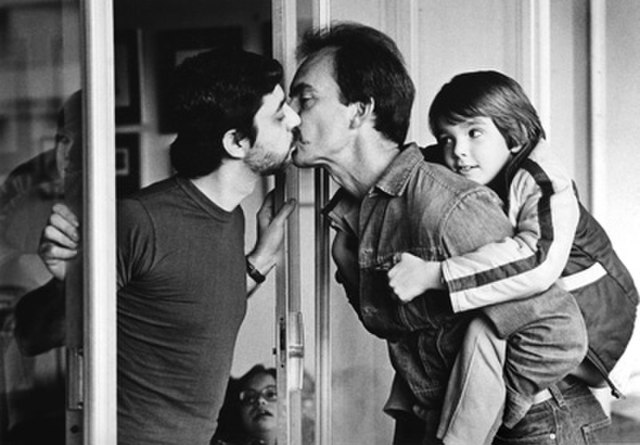
Despite its desire for universalization, the Clio Collective couldn’t talk about everything : blind spots are expected in all history books. But it’s important to avoid universalizing the experiences described in Quebec Women : a History. Racialized women (particularly black women), indigenous women, immigrant women as well as lesbians, among others, are sometimes mentionned but would certainly have benefited from occupying a more important place in the book : after all, they were also part of the history of Quebec and we should not forget it. As such, it is important to read this book with a critical eye, keeping in mind an intersectional perspective which highlights other axes of oppression such as race. Quebec Women : a History is still very pertinent, in particular to analyze the lives of white and heterosexual women in Quebec across centuries.
You will find a great number of references to dig into more specific subjects in the bibliography of Quebec Women : a History. I’m also leaving some suggestions of books that are not in its bibliography as they were published afterwards. Once again, the experiences of white and heterosexual women are at the center of those books. If you know other references thatdeal with women’s history in Quebec, don’t hesitate to email me, in particular if they focus on the reality of marginalized women (immigrants, non-whites, non-heterosexuals, etc). I will add them here : this way we can create a reference bank on women’s history, which will certainly enrich our genealogical research.
Audrey Pepin
References of women’s history :
General :
Clio’s Collective (1987). Quebec Women : a History. Toronto : The Women’s Press, 396 p.
Collectif Clio (1982). L’histoire des femmes au Québec depuis quatre siècles. Montréal : Les Quinze, 521 p.
Bouchard, Serge, Lévesque, Marie-Christine and Back, Francis (2011). Elles ont fait l’Amérique. Montréal : LUX, 452 p.
Women’s Work :
Bazinet, Sylvain (2020). Dictionnaire des artistes québécoises avant le droit de vote. Montréal : Sylvain Bazinet, 306 p.
Gousse, Suzanne (2013). Couturières en Nouvelle-France. Québec : Septentrion, 280 p.
Robert, Camille. (2017). Toutes les femmes sont d’abord ménagères. Montréal : Éditions Somme Toute. 180 p.
Other references in this article :
Bernard, Jean-Paul (1983). « Le collectif Clio, L’histoire des femmes au Québec depuis quatre siècles ». Recherches sociographiques, vol. 24, no. 3, p. 423–428.
Collard, Nathalie (2012, 8 mars). « Il y a 30 ans, le Collectif Clio ». La Presse. [Online]: https://www.lapresse.ca/arts/livres/201203/08/01-4503559-il-y-a-30-ans-le-collectif-clio.php
Lequin, Lucie (1992). « L’histoire des femmes au Québec depuis quatre siècles ». Canadian Woman Studies, vol. 13, no. 1, p.107-108.
McCue, Harvey A. (2020) « Indian » in The Canadian Encyclopedia. [Online]: https://www.thecanadianencyclopedia.ca/en/article/indian-term
Frequently asked questions
The Clio Collective brought together four historians, Marie Lavigne, Jennifer Stoddart, Micheline Dumont and Michèle Jean, who began working together in the 1970s. Their name comes from Clio, daughter of Mnemosyne, the memory goddess, and History’s Muse in Greek mythology.
It covers four centuries of history and gives details about parts of life often considered “trivial”, such as family life or work. It helps you understand the context in which the ordinary women found in our family trees lived, beyond names and dates.
Racialized women, particularly Black women, Indigenous women, immigrant women and lesbians are sometimes mentioned but have little space in the book. It remains very useful for analyzing the lives of white, heterosexual women in Quebec across the centuries, and should be read with a critical eye.
The author suggests Elles ont fait l’Amérique (Bouchard, Lévesque and Back, 2011), Couturières en Nouvelle-France (Suzanne Gousse, 2013), Toutes les femmes sont d’abord ménagères (Camille Robert, 2017) and Dictionnaire des artistes québécoises avant le droit de vote (Sylvain Bazinet, 2020).